

Pavement Accident Claims: Tripped or Fell on a Pavement That Wasn't Maintained
A pavement accident claim is a personal injury claim against the local council, or the business or landowner responsible for a pavement, for a trip, slip or fall caused by a defect they failed to find and repair; it turns on how dangerous the defect was and whether the council inspected the pavement properly, it must normally start within three years, and National Accident Support Line assesses whether you have a claim and refers it to a specialist solicitor with a callback within 2 minutes.
A raised paving slab is the most ordinary hazard in the country and one of the most common causes of a broken wrist. Councils have a legal duty to inspect and maintain pavements, and when they have not, the person injured can claim. These claims are contested, and the two rules that decide them are worth knowing before you start, because they are also the two things you can do something about on the day.
We'll call you back within 2 minutes with a straight answer on where you stand.
Who is responsible for a pavement accident
Public pavements and footpaths are the highway authority's responsibility, which in most places is the local council, under the Highways Act 1980. The council must inspect pavements on a regular schedule and repair defects within a reasonable time. A pavement outside a shop is still usually the council's, unless the shop's own forecourt caused the fall. A private road, a housing estate, a car park or a supermarket approach is the responsibility of whoever controls that land. A pavement dug up by a utility company and badly reinstated is the utility's. The claim is against the responsible body's insurer.
The two rules that decide pavement claims
The first is the size of the defect. Courts have long treated a raised or sunken edge of around an inch, about 25mm, as the point at which a pavement defect becomes dangerous. A trip on a smaller lip is a harder claim, though not an impossible one if the defect was unusually placed or the surrounding stretch was in poor repair. This is why photographing the defect with a coin, a ruler or a shoe for scale on the day matters more than any other single step.
The second is the council's inspection defence. Under section 58 of the Highways Act, a council that can show it inspected the pavement on a reasonable schedule, with a competent inspector, and had no reports of the defect, can avoid liability even where the defect was dangerous. Claims fail on this regularly. They succeed where the defect had clearly been there for months, had been reported before, or was part of an obviously broken stretch the inspection should have picked up. Reporting the defect to the council after your fall does two things: it dates it, and it gets it fixed for the next person.
What a pavement accident claim covers
The injury and its effect on your life. Lost earnings while you could not work. Treatment, physiotherapy and travel. Care from family while you recovered. Damaged clothing, glasses and belongings. Where the injury is lasting, a hip fracture for an older person for instance, the future care and losses that follow.
| Type of pavement defect | Who is usually responsible | What helps the claim |
|---|---|---|
| Raised, sunken or rocking paving slab | The council | Photo with something for scale; report it; neighbours who knew it was there |
| Pothole in the pavement | The council | Depth and width photographed; report reference |
| Loose or missing kerb | The council | Photo; where and how you fell |
| Missing or raised manhole or utility cover | The council or the utility | Photo of the cover's markings |
| Badly reinstated utility works | The utility company | Photo of the reinstatement and any markings |
| Ice or snow not gritted | Sometimes the council, often nobody | Councils grit priority routes only; a claim needs evidence the route was one |
| Tree root heave | The council | Photo of the root and the lift; how long the tree has been there |
We'll call you back within 2 minutes with a straight answer on where you stand.
The situations people describe to us
"I tripped outside my own house and broke my wrist"
The classic claim. Photograph the slab with a coin for scale, report it to the council through its website and keep the reference, and ask neighbours whether it had been reported before. All three help.
"The council says it inspected the pavement last year"
That is the section 58 defence, and it turns on whether the inspection was reasonable and whether the defect was there to be seen. A defect that had clearly been there a long time, or a stretch of pavement in poor repair generally, undermines it.
"It was icy"
Harder. Councils grit priority routes, not every pavement, and a claim needs to show the route was one they should have gritted or that they had gritted it badly. A specialist solicitor will say quickly whether it can run.
"The council repaired it the week after I fell"
Good and bad. Good because it shows the council accepted the defect was there; bad because the evidence is gone. This is why the photograph on the day is everything.
What to do after a pavement accident
Get the injury seen and recorded by a GP or A&E on the day. Photograph the defect from several angles with something for scale, and photograph the wider stretch of pavement. Note the exact location. Take the names and numbers of anyone who saw it. Report the defect to the council and keep the reference. Keep receipts and a note of every day off work. Then get in touch, because the three-year limit runs from the fall and pavements get repaired.
How a pavement accident claim works with National Accident Support Line
Tell us what happened, by the form, WhatsApp or a call to 0333 212 2730, and web enquiries are called back within 2 minutes during opening hours. We ask where it happened, how high the defect was, how long it had been there, whether it was reported and who saw it. If there is a claim, we refer it to a specialist public liability solicitor who runs it on a no win no fee basis. If there isn't, we tell you straight. NASL is an FCA-regulated claims management company, not a law firm. The injuries pavement falls cause are covered in our guide to common injuries from pavement accidents, falls on any surface on the slip, trip and fall page, and the wider picture on accident in a public place claims.
Frequently asked questions
Can I claim for tripping on a pavement?
Yes, where the defect was dangerous, usually a raised or sunken edge of around an inch or more, and the council failed to inspect and repair it reasonably.
Who do I claim against?
The local council for a public pavement, the landowner or business for a pavement they control, or the utility company for badly reinstated works.
How long do I have to claim?
Three years from the date of the fall in England and Wales. For a child, three years from their 18th birthday.
Does the defect have to be a certain size?
Courts treat around an inch, about 25mm, as the point where a defect becomes dangerous. Smaller defects can still succeed in some circumstances.
What if I didn't report it at the time?
You can still claim. Report it now, get the injury on your medical record if it isn't, and gather what evidence remains.
Can I claim for a fall on an icy pavement?
Sometimes. Councils only have to grit priority routes, so the claim needs evidence that the route was one they should have gritted.
What does no win no fee mean?
Nothing to pay upfront and nothing if the claim fails. If it succeeds, the solicitor's success fee, capped at 25% and agreed before the claim starts, comes out of the award.
We'll call you back within 2 minutes with a straight answer on where you stand.
National Accident Support Line Ltd is regulated by the Financial Conduct Authority in respect of regulated claims management activities, registration number 829991.
Sometimes even a simple trip or fall can cause serious injuries. Slips and falls on pavement due to some hurdles or obstacles or some broken pathway can end up in an accident that can be very painful. If the injuries are serious, it may leave you frustrated and helpless. At certain times if an accident on the pavement happened due to someone else’s negligence then there are laws and procedures that may help you with compensation for your damages. The Compensation may vary depending on your jurisdiction, so it’s always advisable to consult with legal professional experts like NASL where the team is specially trained to support you with the righteous specific advice.
All roads and pathways should be maintained to avoid such slips and falls, It’s the important duty of the authority to maintain all the roads, walkways, and footpaths well. The concern department should make sure that road users and pedestrians are safe in all ways while they are on the road. It’s our duty as a citizen to report such broken surfaces to the authority to avoid such pavement accidents. If someone trips on a poorly maintained surface or on an uneven pavement and gets hurt or injured badly, just give us a call and we are there to support and help you to get your damage recovered.
It happens that one suffers severe injuries and is not able to work for some period and might lose a job or more. Thus, getting compensation for slips, trips, or falls on the pavement may be a great support and help. For more details and complete information call our helpline 03332122730 for free advice on accident claims. You can also send us an email or even fill out the form on our page and we rest assured our advisory team will get in touch with you shortly.
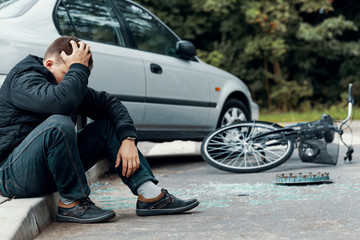
What you should do if met an accident on pavement?
If you’ve been involved in an accident due to poorly maintained pavement or defective road conditions, you may be eligible to make a compensation claim.
Following are the steps to be considered
Seek medical attention
If you've been involved in an accident due to poorly maintained pavement or defective road conditions, you may be eligible to make a compensation claim. Following are the steps to be considered.
Gather evidence
In any accident case, evidence helps. Collect enough evidence to support your claim. Take photographs of the accident scene, broken pavements pictures or any visible injuries you sustained while you tripped on the defective pavement. If there are any human witnesses, don’t forget to obtain contact information from the one who saw the accident.
FAQ'S
In case you find yourself involved in an accident on a neglected pavement surface it becomes crucial to follow a set of recommended actions to protect your overall wellbeing. Foremost among them is immediately seeking medical assistance as your top priority must be ensuring personal safety and recovery from any harm suffered. Gathering concrete evidence of your injuries through thorough documentation using medical records will provide valuable support when pursuing compensation claims if necessary. Furthermore, consider reaching out for professional advice from reputable sources like the experts at the National Accident Support Line (NASL) who specialize in guiding individuals through such challenging situations.
You contribute to raising awareness and ensuring that prompt action is taken by the responsible authority. Additionally. It serves as valuable documentation to support your claim by demonstrating that those in charge were aware of the dangerous situation.
It is essential to reach out to knowledgeable advisors from NASL who possess expertise within this distinct domain when seeking advice concerning your unique predicament. These professionals can provide customized guidance informed by their immersive understanding in such matters whilst simultaneously assessing the potency associated with one’s specific claim. Furthermore, these advisors are fully capable and equipped to facilitate subsequent endeavors encompassing the formulation, completion, and submission processes affiliated with filings by guaranteeing adherence concerning designated timelines outlined by respective authorities amidst precise formulation involving requisites linked to necessary documents stipulated for that context.
Relying upon NASL’s backing arms one with increased confidence when navigating potential intricacies entwined within any legal landscape arising.
Thus, augmenting opportunities for securing a judicious settlement outcome congruent with underlying merit popularized within such contexts.
To determine the potential compensation, NASL’s advisors will carefully evaluate the specifics of your case, considering all the relevant factors and precedents set in similar cases. They will provide you with an estimate of the potential compensation you may be entitled to, ensuring that you have realistic expectations.
When filing a claim for a pavement accident it is essential to consider various types of injuries and damages that may warrant compensation. These can range from physical injuries like broken bones, sprains, bruises, and head or back injuries resulting from slips, trips, or falls on poorly maintained pavements. It is also important to recognize the potential psychological and emotional trauma that can arise from such incidents, including anxiety, depression, and post-traumatic stress disorder (PTSD).
Furthermore. The compensation sought should encompass necessary medical expenses and rehabilitation costs as well as any loss of income or future earning capacity.
Pain and suffering experienced by the victim should also be considered along with any other losses directly related to the accident. At NASL our advisors are dedicated to thoroughly assessing your injuries and damage to ensure that all eligible losses are taken into consideration while pursuing your claim.
For your claim regarding a pavement accident to be reinforced substantively with evidence, it is imperative that you engage in proper data collection. The first step entails photographing the accident scene meticulously with particular emphasis on broken pavements or visible hazards that directly contributed towards said mishap. We recommend capturing vivid imagery of your own injuries that were sustained as consequences thereof. Any individuals present at the site who witnessed this event hold immense potential for supporting your case; hence it is essential that their contact information be obtained diligently by yourself. Moreover, maintaining comprehensive records illustrating all forms of medical intervention undergone by yourself – which include but are not limited to medical reports or prescriptions – will prove invaluable when determining both the magnitude of bodily harm inflicted upon oneself and its subsequent financial implications.
Seeking guidance from a legal advisor at NASL can offer various benefits when handling a claim related to a pavement accident. The skilled team at NASL focuses on addressing all types of accident claims and possesses the knowledge to assist you through legal proceedings. They can evaluate whether your case meets the necessary requirements and aid in identifying the compensation you might deserve. Turning to NASL for advice can equip you with the essential assistance and representation needed to navigate the intricacies of the legal system and negotiate a just settlement in your favor.
Our goal is relentlessly advocating for your rights while seeking a just settlement that comprehensively covers all damages incurred. However, should negotiations fail to generate a satisfactory outcome and there are disputes concerning liability or insufficient settlement offers being made resorting to court proceedings may prove unavoidable. Rest assured that in such situations NASL can effectively connect you with an experienced attorney who will competently represent your interests in court and tirelessly fight for justice on your behalf.
Compensation for an accident involving pavement varies based on numerous factors that significantly influence the final amount granted. Among these factors are two primary considerations: the severity of your injuries and their lasting impact on both your physical health and mental well-being. Evaluating the extent of medical treatment required, which may encompass surgeries, therapy sessions and rehabilitation work aimed at restoring you to optimal condition also plays a crucial role. Additionally, determining compensation considers financial losses sustained due to wage reduction or restricted earning ability resulting directly from this unfortunate event. In addition to covering tangible losses incurred there is also recognition of intangible ones such pain endured during recovery; emotional distress experienced throughout; plus understanding how this experience affects overall quality of life moving forward. Our dedicated advisors at NASL thoughtfully take stock of all these important considerations while methodically collecting relevant evidence needed to construct a compelling argument that secures maximum restitution on your behalf.
When it comes to your pavement accident claim, NASL can be an invaluable resource. Their team of legal advisors specializes in handling accident claims and has extensive experience dealing with slips, trips, or falls on pavements. They kindly offer free advice on a No Win No Fee basis with no obligation for you to proceed unless completely satisfied. The advisors at NASL will assess the merits of your case accurately, guide you through the legal process professionally, gather all necessary evidence meticulously function as intermediary between parties concerned and insurance companies, and negotiate skillfully for a fair settlement on your behalf. They fully comprehend the intricacies of personal injury law dedicated efforts towards safeguarding your rights are steadfastly ensuring rightful compensation.
- Let www.nationalaccidentsupportline.co.uk help you get the most from your settlement. Call 0333 212 2730 and we link you with the best Solicitor in UK.