

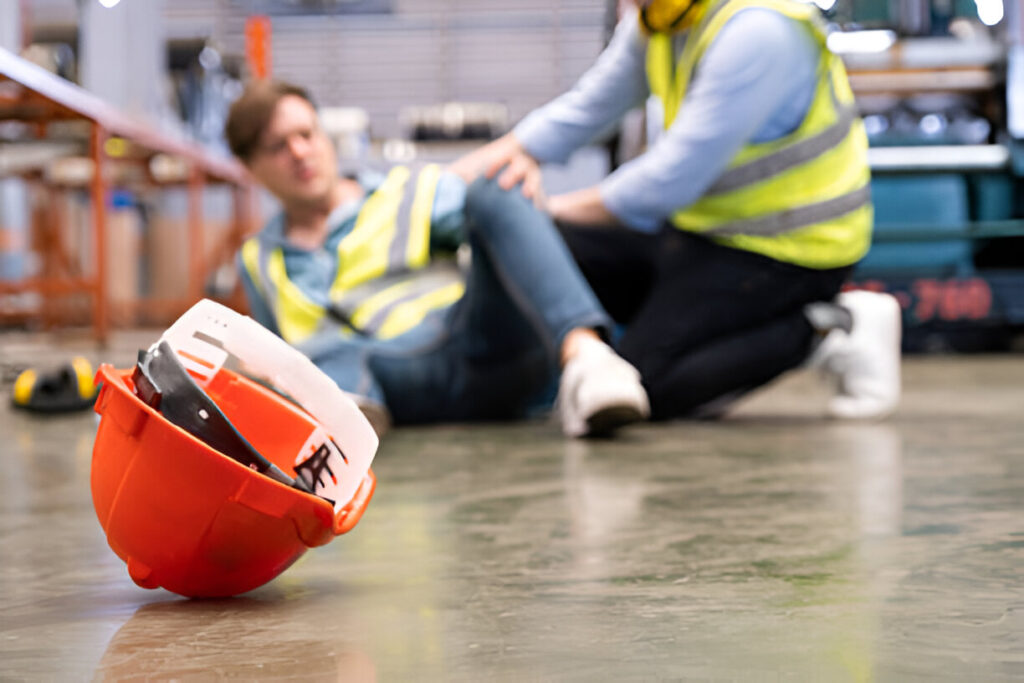
The most common injuries in factory accidents are cuts and lacerations, burns, fractures, repetitive strain injuries, head injuries, eye injuries, hearing loss, respiratory conditions, crush injuries and sprains, and most of them follow a failure the employer was responsible for: a missing guard, no training, no protective equipment or an unassessed lifting job. Where that is the cause, the injured worker can claim against the employer’s liability insurance, and National Accident Support Line assesses whether there is a claim and refers it to a specialist solicitor.
Factories are where the rules are strictest and most often bent to keep the line moving, so the injuries below are rarely random. Each one has a usual cause, and the cause is what decides whether it is an accident or a claim.
We’ll call you back within 2 minutes with a straight answer on where you stand.
The ten injuries
1. Cuts and lacerations
Sharp tools, blades, unguarded machinery, sheet metal and packaging cutters. The usual cause is a guard removed to speed the job, or gloves not provided for a task that needed them. Deep lacerations to hands and forearms often mean tendon or nerve damage and a long recovery.
2. Burns
Hot presses, ovens, molten material, steam lines, chemicals and electrical equipment. Burns follow missing protective equipment, unmarked hot surfaces and chemical handling without training. Chemical burns to the eyes and skin are among the most serious factory injuries.
3. Fractures and broken bones
Falls from platforms and ladders, being struck by moving or falling objects, forklift collisions and limbs caught in machinery. The failure behind them is usually a missing edge protection, an unsafe stacking practice or no pedestrian segregation from vehicles.
4. Repetitive strain injuries
Wrists, elbows, shoulders and backs worn down by the same movement at the same station for a full shift. RSI builds over months, which is why workers assume it is not a claim. It is, where the employer failed to assess the job, rotate tasks or provide equipment that reduced the strain.
5. Head injuries
Falling stock, low structures, falls from height and being struck by moving equipment. Hard hats not provided or not enforced, and racking that is overloaded, are the usual causes. Any head injury at work should be seen in A&E the same day.
6. Eye injuries
Flying debris from grinding, cutting and drilling, chemical splashes, welding flash. Almost all are prevented by eye protection that the employer must provide free of charge and require to be worn.
7. Hearing loss
Noise above the legal action levels day after day without hearing protection or monitoring. Industrial deafness and tinnitus develop over years and are claimable within three years of the worker knowing the condition is work-related.
8. Respiratory issues
Dust, fumes, solvents and fibres breathed in without extraction or respiratory protection. Occupational asthma, dermatitis from the same exposures, and longer-term lung conditions all follow a failure to control the substance under the COSHH regulations.
9. Crushing injuries
Hands and arms in presses and rollers, bodies between vehicles and racking, feet under dropped loads. The cause is nearly always a guard or interlock that was missing or defeated, or a machine that was not isolated before someone cleared a blockage.
10. Strains and sprains
Manual handling: lifting, carrying, pushing and pulling loads that should have been assessed and, where the risk was real, avoided or aided. Single-person lifts of two-person loads are the classic cause.
When a factory injury is a claim
The test is whether the employer did what the regulations required. The Provision and Use of Work Equipment Regulations require every machine to be guarded, maintained and used only by trained staff. The Manual Handling Operations Regulations require lifting jobs to be assessed. The Personal Protective Equipment Regulations require the right protection, free. Where an injury followed a failure under any of those, the claim is against the employer’s liability insurance, which every employer must hold, and it is paid by the insurer, not the business. Agency and temporary workers on the factory floor are owed the same duty. Making a claim cannot lawfully cost you your job.
We’ll call you back within 2 minutes with a straight answer on where you stand.
What to do after a factory accident
See the first aider and then a doctor, so the injury is on a medical record with a date. Make sure the accident is in the accident book and ask for a copy. Photograph the machine, the guard, the load or the floor, and your injuries. Note who was on shift and who saw it. Ask whether the accident was reported to the HSE, which is required for serious injuries and for any injury that keeps you off normal work for more than seven days. Keep every receipt and a note of every day off. Don’t sign anything from the employer or their insurer without advice.
Preventing factory injuries
Guards in place and interlocks working. Lock-off before anyone clears a blockage. Manual handling assessed and aided. Eye, ear, hand and respiratory protection provided and enforced. Forklifts and people kept apart. Training that is recorded and refreshed. None of this is the worker’s job to arrange; all of it is what the employer is judged against when someone is hurt.
How a factory injury claim works with National Accident Support Line
Tell us what happened, by the form, WhatsApp or a call to 0333 212 2730, and web enquiries are called back within 2 minutes during opening hours. We ask what caused it, whether the machine was guarded, whether you had training and who saw it. If there is a claim, we refer it to a specialist workplace injury solicitor who runs it on a no win no fee basis. If there isn’t, we tell you straight. NASL is an FCA-regulated claims management company, not a law firm. The full picture is on our factory accident claim page, factories are one part of accident at work claims, and how a personal injury claim works covers the process every claim follows.
Frequently asked questions
What are the most common factory injuries?
Cuts and lacerations, burns, fractures, repetitive strain injuries, head and eye injuries, hearing loss, respiratory conditions, crush injuries and manual handling strains.
Can I claim for a factory injury?
Yes, where the injury followed a failure by the employer: a missing guard, no training, no protective equipment, an unassessed lifting job or an unsafe floor or vehicle route.
Can I claim for hearing loss or a lung condition from factory work?
Yes, within three years of knowing the condition is work-related. These are industrial disease claims and are handled by the same specialist solicitors.
Can I claim if I’m agency staff?
Yes. The factory owes the same duty to agency workers on its floor as to its own employees.
How long do I have to claim for a factory accident?
Three years from the accident, or from the date you knew an injury or illness was caused by the work.
Will I lose my job for claiming?
No. Dismissing or penalising a worker for making an injury claim is unlawful, and the claim is paid by the employer’s insurer.
We’ll call you back within 2 minutes with a straight answer on where you stand.