

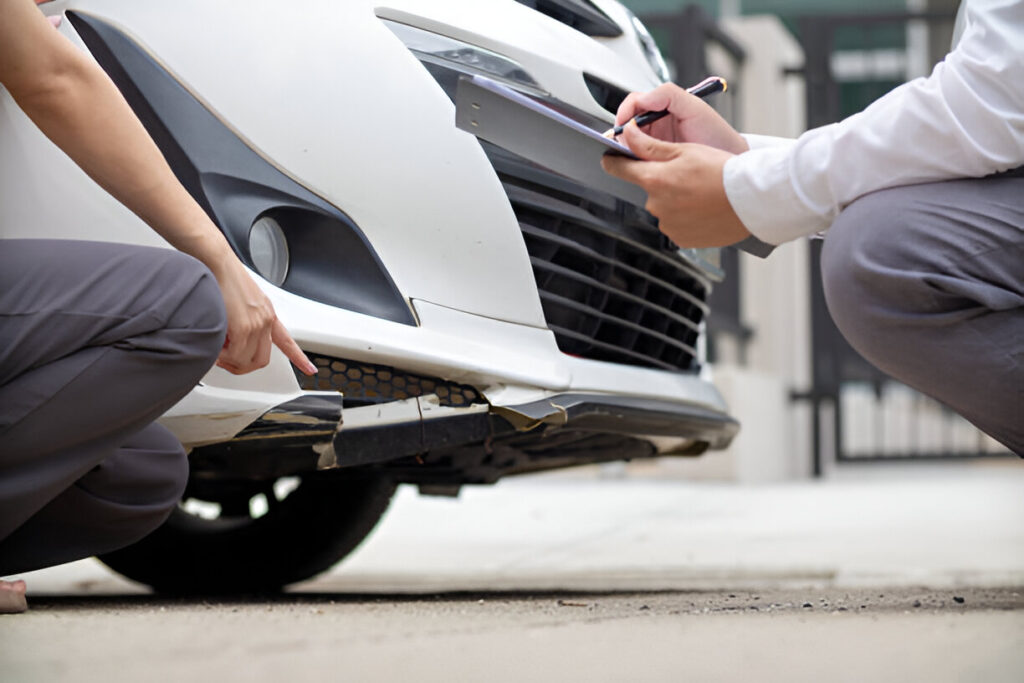
If you were rear-ended and it wasn’t your fault, the claim goes against the insurer of the driver who hit you: they should pay to repair your car, or its value if it’s written off, your recovery and storage costs and a like-for-like hire car while yours is off the road, so you shouldn’t need to pay your own excess. Any injury is claimed separately. National Accident Support Line handles the car side for you, from the first call to collecting the finished repair.
Most shunts from behind happen at low speed in ordinary places: a queue for a roundabout, stopped at the lights, crawling along a dual carriageway at rush hour. There’s a bang, the other driver gets out, often apologetic, and you swap details at the roadside. It feels clear-cut, and usually it is. But the driver behind still has to be shown to be at fault, their insurer sometimes tells a different story a week later, and meanwhile you need a car for work.
No excess to pay if the accident wasn’t your fault. Fill in our form and we’ll call you back within 2 minutes.
Why the driver behind is usually to blame, and when it’s less simple
Rule 126 of the Highway Code says drivers should leave enough space to pull up safely if the vehicle in front suddenly slows down or stops. So when one car runs into the back of another, the starting point is that the driver behind was too close, too fast or not paying attention, and most rear-end claims are accepted without much of a fight.
Usually isn’t always. You still have to show, on the balance of probabilities, how the crash happened, and the other insurer will look for anything that moves blame forward. These are the arguments that come up most.
| What their insurer says | What usually decides it |
|---|---|
| “You braked suddenly” | Braking because traffic slowed, a light changed or someone stepped out is normal driving. Blame is only shared where a driver stopped hard for no reason, and footage usually settles it |
| “You rolled back into us” | Where the damage is, whether the road slopes, and any dashcam. A car rolling back on a hill start is the one that moved |
| “You started to pull out, then stopped” | Common at junctions and roundabouts. The driver behind should wait until the car in front has actually gone, so this rarely shifts the blame |
| “Your brake lights weren’t working” | Whether they were. A car without working brake lights can share the blame, so have yours checked and photographed |
| “We were pushed into you” | Whether there was a third car, and the damage to each one. See three-car shunts below |
For crashes that aren’t from behind, our separate guide sets out who usually carries the blame in other common collisions.
The evidence that settles a rear-end claim
Most disputes come down to one account against another, so what you gathered on the day matters more than what was said.
Dashcam footage. Save it the same day. Most cameras record over old footage, and a low-speed shunt doesn’t always lock the file. A front camera shows why you slowed; a rear camera shows the other car’s approach. Keep the original file, not a phone video of the screen.
Photos. Both cars where they stopped, if it’s safe before anyone moves, then the damage close up on each car, both number plates, the road surface and whatever was ahead of you. The height and position of the damage help show which car was moving.
The other driver’s details. Name, address, phone number, registration and insurer. If they refuse to give details, or drive off, report it to the police as soon as you reasonably can and within 24 hours. There’s a separate route for claims where the driver behind didn’t stop.
Admissions. A roadside “sorry, my fault” helps, but it isn’t a formal admission, and people often tell their insurer something different later. A text saying they hit you is better, so keep it. A written admission from their insurer carries the most weight, though even that can occasionally be withdrawn, so hold on to your evidence until the claim is closed.
Witnesses and the police. The name and number of anyone who saw it, including the driver in front if they stopped. If the police came, note the officer’s name and the reference number.
Three-car shunts and being pushed into the car in front
In a queue, one impact often becomes two or three. If the car behind hit you and pushed you into the car in front, the driver at the back is normally responsible for both bumps, because the chain started with them. Where insurers argue is over the order: did you hit the car in front first, under your own steam, and then get hit? The answer is usually in the dashcam, in what witnesses heard (one bang or two) and in how much damage is on the front of your car. If the driver in front claims against you, tell your own insurer, pass the details to whoever is handling your claim, and don’t argue it with them yourself.
Getting your car repaired after a shunt from behind
Rear damage is often worse than it looks. A plastic bumper can spring back into shape while the crash bar behind it, the parking sensors, the boot floor or a tow bar are damaged. Have it inspected even if it seems fine, mention anything new (a boot that won’t shut cleanly, a warning light, a rattle), and don’t sign the repair off as settled until you’ve checked it.
The at-fault insurer has to pay the reasonable cost of the repair; its engineer may inspect the car first. If the repair would cost more than the car is worth, it’s written off and the claim is for its pre-accident value instead; our guide explains what a write-off settlement should cover. On our claims the repair goes through our network, and our repair management service covers it from recovery to collection. If a child seat was in the car, many manufacturers say to replace it after a crash, so check its manual and keep the receipt for the new one.
| After the shunt | The repair | A car in the meantime |
|---|---|---|
| Drivable, with cosmetic damage | Booked in when the bodyshop has space; you keep using your car until then | A hire car for the days it’s in the bodyshop |
| Broken rear lights or a boot that won’t lock | Rear lights and brake lights have to work by law, so the car may need to come off the road straight away | A hire car from the day you stop driving yours |
| Not drivable | Recovered and stored, then assessed | We aim to have a replacement with you within 48 hours |
| Written off | Valued by the at-fault insurer | The hire runs until the settlement is paid |
A like-for-like hire car while yours is off the road
If you need a car while yours is repaired or valued, the at-fault insurer has to cover it. Through us it’s arranged on credit hire: a car equivalent to yours, the same size and class, an automatic if you drive one, with the hire charges claimed from the other driver’s insurer at the end of the claim rather than paid by you up front.
Credit hire works when the accident wasn’t your fault and you genuinely need the car, and a shunt from behind often settles the first point quickly. You sign a credit hire agreement, so read it first and ask what you’d owe if fault were disputed later, whether there’s an excess if the hire car is damaged, and who pays for fuel, fines and late return.
If the other driver’s insurer rings offering one of its own cars, you don’t have to take it, but tell us what was offered: turning down a suitable car can affect what can be recovered for hire, and you should only have one replacement at a time. The rest of the claim, from the roadside onwards, is set out in every step of a non-fault vehicle claim.
No excess to pay if the accident wasn’t your fault. Fill in our form and we’ll call you back within 2 minutes.
Whiplash after being rear-ended, in brief
Neck pain after a rear impact often doesn’t show until the next morning. Get it checked by your GP or NHS 111, and note your symptoms and time off work.
For adult drivers and passengers in England and Wales, the rules changed for accidents on or after 31 May 2021. Where the injury is worth up to £5,000, the claim goes through the government’s Official Injury Claim service, whiplash lasting up to two years is valued on a fixed tariff (revised for accidents on or after 31 May 2025), and the claim can’t be settled without a medical report. The tariff covers the injury only: the car, the hire, lost earnings and other losses are claimed on top. Motorcyclists, cyclists, pedestrians and children are outside these rules, and they don’t apply in Scotland. Don’t accept an early injury offer from the other insurer before you’ve had advice. Our guide to how a whiplash claim works under the tariff has the detail, and we can refer the injury to a specialist solicitor.
Winter shunts: queues, wet roads, low sun and dark evenings
The clocks went back on 25 October, so more of the commute is in the dark, and wet roads, frost and low sun all make shunts from behind more likely. The Highway Code expects the driver behind to drive for the conditions: rule 126 says the gap should be at least doubled on wet roads and up to ten times greater on icy ones, and rule 237 says a driver dazzled by bright sunlight should slow down and, if necessary, stop. So “the road was greasy” or “I couldn’t see for the sun” doesn’t normally move the blame onto the car in front, though every claim still turns on its evidence. If the other driver is blaming the weather, read when a driver says the road was too icy to stop.
Photos taken in the dark miss detail, so use the flash and photograph the car again in daylight. And in standing motorway traffic the same driver may have hit more than one car, so get everyone’s details.
What drivers tell us after being hit from behind
“Their insurer now says I slammed my brakes on”
It’s the most common argument in these claims. Braking because the traffic ahead stopped, a light changed or someone stepped into the road is exactly what the driver behind should have been ready for. Send us your footage, photos and witness names, and if the other side disputes it, our in-house recovery team argues it with their insurer on the evidence.
“It was only a tap, so we agreed to sort it privately”
Sometimes that works. The trouble starts when the quote comes back higher than expected, the other driver stops answering, or your neck is sore the next day. You still have to tell your own insurer, and the claim against the other driver is still there if the deal falls through, so keep their details and your photos.
Frequently asked questions
What happens if someone crashes into the back of my car?
Exchange details, take photos, save any dashcam footage and tell your own insurer. The claim for the repair, a replacement car and your other losses then goes to the other driver’s insurer.
Can getting rear-ended ever be your fault?
Occasionally, in part. Blame can be shared if you rolled back, stopped hard for no reason, cut in and braked, or your brake lights didn’t work. Braking for traffic or a hazard is not a reason to blame you.
Can I get a hire car after being rear-ended?
Yes, if the accident wasn’t your fault and you need one. It should be equivalent to your own car and last until yours is repaired or the write-off is settled, with the hire charges claimed from the at-fault insurer.
Do I have to claim on my own insurance if I was rear-ended?
No. You must tell your insurer the accident happened, but the claim itself can be made against the driver who hit you, which keeps your excess out of it.
How long do I have to claim after a rear-end collision?
In England and Wales, three years from the accident for an injury and six years for damage to the car. For a child, the three years starts at 18. Scotland’s time limits are different. Evidence is easier to gather while it’s fresh, so don’t leave it.
What if the driver who hit me had no insurance?
The claim can usually go to the Motor Insurers’ Bureau, which deals with uninsured and untraced drivers. Tell us what happened on the call and we’ll say how it can be handled.
No excess to pay if the accident wasn’t your fault. Fill in our form and we’ll call you back within 2 minutes.