

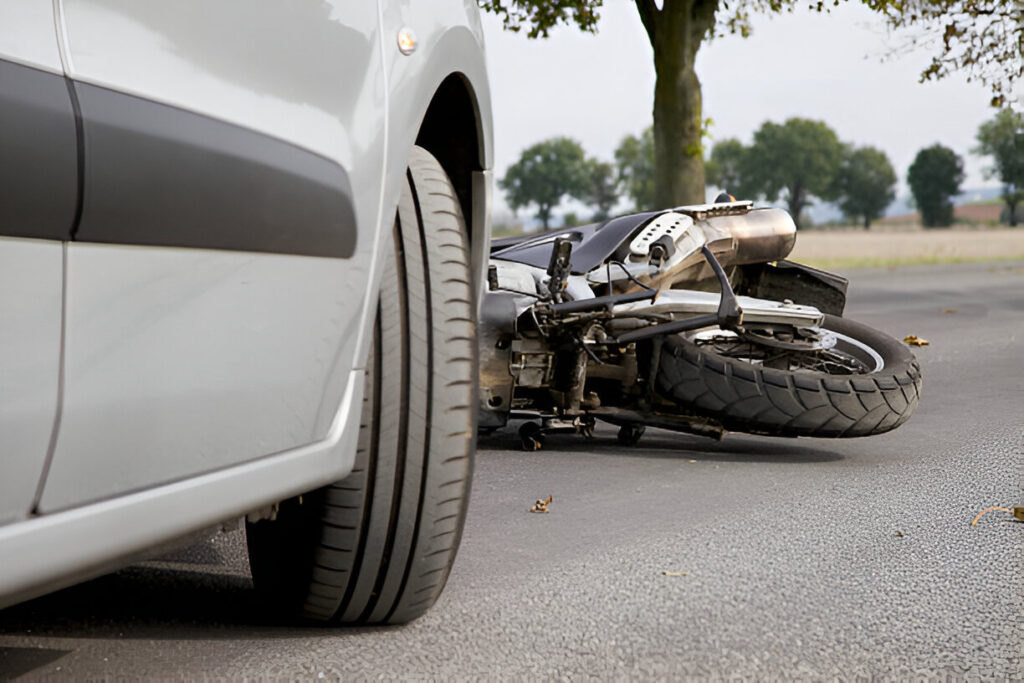
After a motorbike accident, get somewhere safe, call 999 if anyone is hurt, keep your helmet on if you’re injured, and stop and swap details with the other driver, as the law requires. Then photograph the scene, take witness details and save any helmet camera footage before it records over. Over the next few days, get checked by a doctor even if you feel fine, keep the damaged bike and kit, and tell your insurer. You don’t have to decide about a claim straight away. If another driver caused it, claims for riders knocked off by another driver can cover a replacement bike, the repair or write-off value and your kit, with injuries referred to a specialist solicitor, and National Accident Support Line can talk it through with you first.
This guide is for the evening after: what the law expects of you, the evidence that disappears fastest and the mistakes that cost riders money later, whether or not you ever claim.
Not sure yet whether to claim? Ask us anyway. Fill in our form and we’ll call you back within 2 minutes; talking it through doesn’t commit you to anything.
At the scene: the first few minutes
If you can move without pain, get out of the traffic and onto the verge or pavement, away from the vehicles rather than between them. Turn the engine off, and put the hazards on if the electrics still work. If you have neck or back pain, or numbness or tingling in your arms or legs, stay where you are unless you’re in immediate danger.
Leave your helmet on if you’re hurt. The Highway Code tells anyone helping at a crash not to remove a motorcyclist’s helmet unless it is essential, because pulling it off can move an injured neck. Lifting the visor to breathe and talk is fine.
Call 999 if anyone is injured, the road is blocked or dangerous, the other driver seems drunk or on drugs, or they’re leaving without giving details. For anything less urgent, call 101.
Your legal duties: stopping, details and the 24-hour rule
These come from section 170 of the Road Traffic Act 1988 and rules 286 and 287 of the Highway Code. They apply to every driver and rider involved, whoever was at fault, including you.
| Situation | What the law requires |
|---|---|
| A collision causes injury to someone else, or damage to another vehicle, an animal or property | Everyone involved must stop. This can apply without contact, for example where a driver pulled out and you came off avoiding them |
| Anyone with reasonable grounds asks for your details | Give your name and address, the owner’s name and address if the bike isn’t yours, and the registration number |
| Details weren’t exchanged at the scene, for any reason | Report the accident to the police as soon as you reasonably can, and within 24 hours at the latest |
| Someone else was injured and the insurance certificate wasn’t shown | Report it to the police within 24 hours, and produce the certificate within seven days |
| Details were swapped and nobody else was hurt | No legal duty to report it to the police, though you still can |
If you went to hospital before anyone swapped details and the police didn’t attend, contact them as soon as you’re able. Keep the police reference number: your insurer will ask for it, and so will anyone handling a claim for you.
Evidence to collect before you leave
Photograph more than you think you need: both vehicles where they ended up, the damage on each (including paint or scuffs on the car), their number plate, the junction or bend from the direction you were riding, road markings, anything on the surface such as diesel or gravel, and your injuries and kit.
Take witnesses’ names and numbers, not just a promise to be in touch: people who stop to help are often the first to leave once the ambulance arrives.
If you run a helmet camera, save the clip now. Most cameras record on a loop, so the crash can be overwritten on the ride home. Copy the original file off the card the same day and keep it unedited. Ask about other footage too: dashcams, buses, shop CCTV, doorbell cameras. Much of it is deleted within days or weeks.
Write down what the other driver said. “Sorry mate, I didn’t see you” at the roadside can become “the bike came out of nowhere” a week later.
In the hours and days after
Get checked, even if you feel fine. Adrenaline hides pain for hours, and riders often wake up the day after a spill with a swollen wrist, a cracked collarbone or a headache that won’t shift. Go to A&E, an urgent treatment centre or your GP, or call NHS 111, and say it was a motorbike accident. A medical record made close to the crash also matters if you claim later.
Keep the damaged kit. Don’t wear the helmet again, even if it looks fine: the liner is made to absorb one impact and can be crushed with no mark on the shell. Leathers and textiles lose their protection where they’ve slid along the road. Keep everything, photograph it and find the receipts, because a claim for kit relies on the damaged item and proof of what it cost.
Tell your insurer. GOV.UK says you must report the accident to your insurance company even if you’re not planning to claim. Reporting isn’t claiming: give the facts and say you haven’t decided yet. Ask whether your policy includes legal expenses cover or a courtesy bike; our guide to what a courtesy bike from your own policy usually is explains why the second often falls short.
Find out where the bike is. If it was recovered from the scene, by the police, a recovery firm or your breakdown cover, find out which yard has it. Storage is charged by the day, and a yard may want paying before it releases the bike. Those charges can be claimed from the at-fault insurer, but only for a reasonable period, so don’t leave it there for weeks. If the bike came home with you, don’t ride it until it’s been checked: riding a vehicle in a dangerous condition is an offence, and bent forks aren’t always obvious.
What not to do in the first week
Don’t take the other insurer’s first offer. The at-fault driver’s insurer may ring within a day or two, offering to collect the bike, repair it, lend you one or pay you to settle. Write down exactly what’s offered, and don’t agree to anything or give a recorded statement on that first call. An early injury offer arrives before anyone knows how you’ll recover. If they offer a replacement bike, tell whoever advises you what it is and for how long, because turning down a suitable bike can affect what can be recovered for hire later.
Don’t scrap, sell, strip or repair the bike, and don’t throw the kit away. The damage is evidence, so wait until the insurer paying for it has inspected it or agreed the figure.
Don’t admit fault. Be polite and check the other person is all right, but leave who caused it for later. In England and Wales an apology isn’t, on its own, an admission of liability, but “it was my fault” in a statement or online is a different matter. That includes forums: a post wondering whether you were going a bit quick can be quoted back at you.
Don’t sign anything you haven’t read: a repair authority, a settlement form or a hire agreement.
No excess to pay if the accident wasn’t your fault. Fill in our form and we’ll call you back within 2 minutes.
When you’re ready: your options if it wasn’t your fault
If another driver caused it, the claim goes against their insurer, not yours, so you don’t pay your own excess and your policy isn’t used for the bike.
| What you need | How it usually works |
|---|---|
| A bike to ride in the meantime | A like-for-like replacement while yours is off the road, if you need one, through credit hire |
| Your bike repaired | The repair arranged, with the cost claimed from the at-fault insurer |
| Your bike written off | Its value just before the crash, plus your other losses |
| Your kit replaced | Claimed as part of your losses, using the damaged items and receipts |
| Your injuries | Referred to a specialist solicitor, usually on a no win no fee basis |
A replacement bike is a recoverable cost of a non-fault accident, as long as you need one. Our page on getting a bike that matches yours while it’s off the road explains like-for-like for different bikes and licences. It’s arranged on credit hire, a credit agreement: the charges are claimed from the at-fault insurer, but read it first, ask what you’d owe if liability were disputed, and expect to pay for things in your control, such as fuel, fines, late return and any excess on the hire bike. What you sign on credit hire, and why sets it out.
We can have the repair managed for you, or if the bike is beyond economic repair, how write-off categories and valuations work for bikes covers the categories, the value and keeping the bike.
We don’t run injury claims ourselves; we refer them to a specialist solicitor. Riders also aren’t covered by the 2021 changes that send most minor injury claims by car drivers and passengers through the Official Injury Claim portal. Who can claim for a motorbike injury, and the time limits explains that side.
If the other side says it was you, how fault gets decided between insurers explains how it’s argued, and our recovery team argues the vehicle side on the evidence you saved. If the driver didn’t stop or wasn’t insured, claims where the other driver drove off has the reporting rules. If the crash was mainly your fault, your own policy decides what you get, and we’ll tell you so.
There’s no need to decide today, but there are limits. In England and Wales an injury claim usually has to start within three years, and a claim for the bike and kit alone within six. Footage and storage costs won’t wait that long, though.
Situations riders describe to us
“I rode home feeling fine and woke up barely able to move my wrist”
Very common. Get it looked at now and tell the doctor it followed a crash. A gap of a day changes nothing, but a gap of weeks makes the link harder to show. Keep the gloves and jacket you were wearing.
“The car never touched me. I braked hard to avoid it and went down”
A driver can be responsible without any contact, if their driving caused you to come off. These cases turn on evidence, so witnesses and helmet camera footage matter more than usual. If the driver carried on without stopping, report it to the police straight away.
Frequently asked questions
What should I do immediately after a motorbike accident?
Get safe, call 999 if anyone’s hurt, keep your helmet on if you’re injured, and stop and swap details. Then photograph the scene, take witness numbers and save any footage.
Should you take your helmet off after a motorbike crash?
Not if you’re hurt. The Highway Code says a motorcyclist’s helmet shouldn’t be removed unless it is essential, because it can move an injured neck. Lift the visor and wait for the paramedics.
Do I have to report a motorbike accident to the police?
Only in some cases. If details weren’t exchanged at the scene, or someone else was injured and the insurance certificate wasn’t shown, it must be reported within 24 hours.
Do I have to tell my insurer if I’m not making a claim?
Yes. You must report the accident even if you don’t plan to claim, and reporting it doesn’t mean you’ve claimed on your policy.
Should I speak to the other driver’s insurer?
You can take the call, but don’t agree to anything or give a recorded statement straight away. Note what’s offered, including any bike, and get advice first.
Can I claim for my helmet and leathers?
If the accident wasn’t your fault, damaged kit is part of what’s claimed from the at-fault insurer. Keep the items and proof of what you paid.
No excess to pay if the accident wasn’t your fault. Fill in our form and we’ll call you back within 2 minutes.