

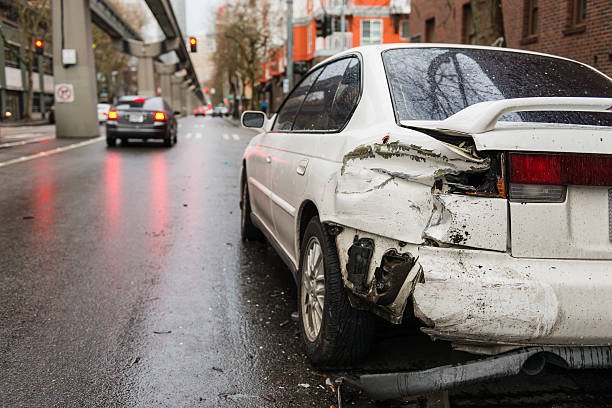
Credit hire is a way of getting a replacement vehicle after an accident that wasn’t your fault: a hire company supplies a car equivalent to yours on credit, and the hire charges are claimed from the at-fault driver’s insurer at the end of the claim instead of you paying as you go. You sign an agreement for it, so it isn’t a free car, but on a clear non-fault claim the bill lands with the insurer of the driver who caused the accident. If you already know you need a car, here’s how NASL arranges a credit hire vehicle.
Most of what’s written about credit hire is aimed at lawyers and insurers. This guide is for the driver: who pays, why the rate is higher than a normal rental, what you sign and what could still come back to you.
No excess to pay if the accident wasn’t your fault. Fill in our form and we’ll call you back within 2 minutes.
How credit hire works, from the accident to the bill
Someone else causes the accident and your car is off the road. A hire company, or an accident management company working with one, checks the accident wasn’t your fault and that you need a vehicle, delivers a car of the same class as yours, and you sign a hire agreement. You drive it while your car is repaired or the write-off is settled, then hand it back. The invoice goes to the at-fault driver’s insurer. If the insurer won’t pay, the claim can go to court, and it’s made in your name, because legally it’s your claim for the loss of use of your car, even though the hire company carries the cost while it runs.
Who pays, and why the rates are higher than a normal rental
The at-fault driver’s insurer is expected to pay. The daily rate is usually well above what a rental desk would charge for the same car, and that’s what insurers object to most. There are real reasons for it. A rental company takes a deposit and payment up front. A credit hire company hands over the car with nothing paid, delivers, insures and collects it, then waits months for its money, sometimes years if the claim is fought, and carries the risk of never being paid.
Insurers say those costs feed into everyone’s premiums, and the courts have listened. In Dimond v Lovell [2000] UKHL 27, the House of Lords held that a driver who could have afforded an ordinary rental can recover only the basic hire rate, what that rental would have cost, not the extra charged for waiting and taking the risk. The Court of Appeal has since said the basic hire rate is the lowest reasonable rate quoted by a mainstream supplier for a similar car (Stevens v Equity Syndicate Management [2015] EWCA Civ 93, confirmed in McBride v UK Insurance [2017] EWCA Civ 144).
Why you might be asked about your finances
There’s an exception with an awkward name: impecuniosity. In Lagden v O’Connor [2003] UKHL 64, the House of Lords held that a driver who couldn’t have paid for a hire car without sacrifices they couldn’t reasonably be expected to make can recover the full credit hire rate. Put simply, if a rental and deposit would have meant real hardship, credit hire was the reasonable choice.
It’s for the driver to show this. In England and Wales, a court claim for vehicle hire has to set out the need for the car, the hire period, the rate and why they’re reasonable, and for credit hire, whether the driver says they were impecunious. So you may be asked for bank statements or details of your income and outgoings. That’s normal, not a sign anything is wrong.
The agreement you sign and what you could owe
A credit hire agreement is usually an unregulated credit agreement. The Financial Ombudsman Service can look at how your insurer or broker referred you, but usually not at a complaint about the hire company itself. So read the agreement before you sign.
| Cost | Who normally pays |
|---|---|
| Hire charges, where liability is accepted | Claimed from the at-fault driver’s insurer |
| Parking fines, speeding fines, congestion, ULEZ or toll charges | You, because they’re within your control |
| Fuel | You, as you would in your own car |
| Damage to the hire car | Check whether there’s an excess on the hire vehicle |
| Keeping the car after your own is ready | You may be charged for the extra days |
| Hire charges, where liability is disputed and the claim fails | Depends on the agreement, so ask before you sign |
That last row is the question to ask every time: what happens to the charges if the other side denies fault, or says the hire went on too long, and the court agrees? Some agreements come with insurance for unrecoverable charges, some don’t. Get the answer in writing before the car arrives.
Need and like-for-like
A replacement isn’t automatic just because you were hit. You have to need it. If your car is safe to drive and goes in for repair next month, the hire starts when it goes in. If there’s a second car at home you could reasonably use, say so. Keep a rough note of how you use it (school run, work, appointments), because that’s your evidence of need.
Like-for-like means a car equivalent to yours, not a better one. Hire cars are grouped into classes by size, type and value, and the right class is your own car’s: a seven-seater for a seven-seater, an automatic for an automatic, prestige for prestige. An upgrade you didn’t need can be challenged, and the difference may not be recoverable.
How long you can keep a credit hire car, and handing it back
You keep it while your own car is off the road because of the accident: assessed, waiting for parts, repaired, until it’s ready to collect. If it’s written off, the hire normally runs until the settlement for its value is paid. There’s a limit even so: if you could reasonably have bought a replacement sooner, the other side can argue the hire should have stopped then. In Zurich Insurance v Umerji [2014] EWCA Civ 357, the Court of Appeal stopped a 591-day hire two weeks after the written-off car was disposed of, the point by which the driver could have bought another.
When your car is ready, return the hire car promptly. Photograph it at handover, note the fuel and the time, and keep the collection note. Late returns are one of the few charges that are clearly yours.
No excess to pay if the accident wasn’t your fault. Fill in our form and we’ll call you back within 2 minutes.
What the Financial Ombudsman says about being referred to credit hire
Many drivers are passed to credit hire by their insurer, a broker or a claims company on the first call after the accident. The Financial Ombudsman Service expects whoever refers you to explain that you’re stepping outside your insurance policy, that problems with the hire are between you and the hire company, and that you could become liable for the costs if fault or the amount is disputed. They should mention cover you already have, such as a courtesy car, and be balanced: if they say credit hire means no excess, they should also say an excess can usually be reclaimed on a non-fault claim.
A referral may be unsuitable, it says, if your car was drivable, you had a suitable courtesy or spare car, or it was clear the other side would dispute fault. If you think you were referred badly, complain to the referring firm first; it has eight weeks to reply, then you can go to the Ombudsman. If you’re still deciding, check what your own insurer’s courtesy car covers first.
Can you change credit hire company?
You can usually end a hire agreement, but changing company isn’t a clean swap. The first company’s charges to that point still have to be recovered, the agreement may have cancellation terms, and two companies claiming for overlapping days causes trouble. Ask the first company in writing what ending it would mean, and tell any new company exactly what you’ve signed.
If the claim goes to court
If the at-fault insurer won’t pay, solicitors may issue a claim in your name. You might be asked for a witness statement on what happened, why you needed the car and how you used it. It carries a statement of truth, and a false statement can lead to contempt of court proceedings, so check every line. You may also be asked to attend a hearing, sometimes a year or two after the accident, so keep your paperwork.
How National Accident Support Line arranges credit hire
We confirm the accident wasn’t your fault before a vehicle is delivered, and ask how you use your car so the hire is needed and the class is right. We explain the agreement before you sign, including what you’d owe and what happens if fault is disputed. The vehicle comes from a partner network of over 4,000 vehicles across 300-plus models, so we can match yours. We arrange the repair or pursue the write-off value, and if the other insurer disputes fault, our in-house recovery team argues it on the evidence. If you were hurt, we refer the injury claim to a specialist solicitor. For the rest, see the full non-fault claim for your car and our side-by-side guide to credit hire and courtesy cars.
Situations people describe to us
“I thought I was ringing my own insurer”
It happens. People search for their insurer’s claims line after a crash, ring the first number they see, and later find it was a claims company. Ask who you’re speaking to and whether you’re claiming on your own policy or being passed to a hire company. If it’s a hire company, get the agreement and costs in writing.
“The other driver’s insurer rang and offered me a car”
You don’t have to take it, but turning down a suitable car they’ve offered can affect how much of the hire is recovered later. Note what car was offered and for how long, and tell us on the call.
“I’ve had a letter about a court case from an accident two years ago”
Credit hire disputes can take that long. Reply to the solicitors handling it and dig out the hire agreement, photos, messages and any notes on how you used the car.
Frequently asked questions
What does credit hire mean?
It means hiring a replacement vehicle after a non-fault accident on credit. You don’t pay as you go; the hire charges are claimed from the at-fault driver’s insurer at the end.
Why is credit hire so expensive?
The hire company asks for no deposit, waits months for payment and carries the risk of not being paid. Insurers dispute those rates, and a driver who could have afforded an ordinary rental may recover only the basic hire rate.
What are the risks of credit hire?
That fault is disputed and the claim fails, that the hire is found unnecessary or too long, or that the car was a higher class than you needed. Depending on the agreement, some charges could then fall to you, so ask what you’d owe before you sign.
Can I get credit hire after a write-off, and how long can I keep it?
Yes. Hire normally runs until your car is repaired or, for a write-off, until the settlement for its value is paid. If you could reasonably have replaced it sooner, the other side can argue the hire should have ended earlier.
Can I get credit hire after any accident?
Only if someone else was at fault and you need a vehicle. If your car still drives, the hire usually starts when it goes in for repair.
What are credit hire car classes?
Hire vehicles are grouped by size, type and value. You should get a car in the same class as yours, such as a family estate, a seven-seater or a prestige saloon, not a smaller car or an upgrade.
No excess to pay if the accident wasn’t your fault. Fill in our form and we’ll call you back within 2 minutes.