

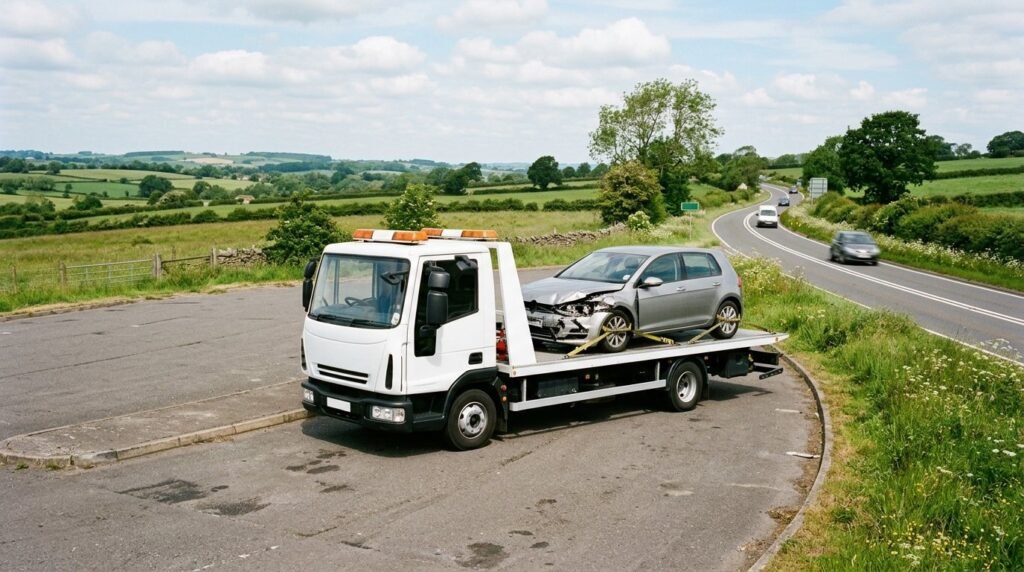
If the accident wasn’t your fault, reasonable recovery and storage charges are part of your claim and are paid by the at-fault driver’s insurer. The word that matters is reasonable. Storage is charged by the day, and the other insurer will refuse to pay for days that didn’t need to happen. When the accident wasn’t your fault, National Accident Support Line manages the repair from the roadside, with the car taken to a repairer in our network rather than left in a yard, and a like-for-like replacement while it’s fixed.
The bill tends to arrive late. The crash was weeks ago, the car was towed somewhere you’ve never heard of, and now a letter says you owe several hundred pounds in storage, going up every day. Nobody told you the clock was running.
No excess to pay if the accident wasn’t your fault. Fill in our form and we’ll call you back within 2 minutes.
Who pays for recovery and storage
It depends on who caused the accident and how you claim.
| Your situation | Who usually pays | What to watch |
|---|---|---|
| Not your fault, the other driver is identified and insured | The at-fault driver’s insurer, as part of your claim | Only reasonable charges. Days the car sat waiting for no good reason may be refused |
| Your fault, comprehensive cover | Your own insurer, under your policy | Your excess applies, and your insurer will usually move the car to its own garage quickly |
| Your fault, third party only cover | You | Get the car out of storage as soon as you can, because nobody else is paying |
| Hit and run, or the other driver had no insurance | Usually your own comprehensive policy | See what to do after a hit and run and being hit by an uninsured driver |
| Fault is disputed | Nobody, until fault is settled | Storage keeps building while the argument goes on. Move the car if you can |
What recovery and storage cost
There are two kinds of charge. If the police have the car removed, for example because it was blocking the road after the crash, the charges are fixed by law. If a private recovery firm or garage takes it, they set their own rates.
These are the police charges for a car or van up to 3.5 tonnes in England and Wales, as set by the Home Office from 6 April 2023:
| Charge | Amount |
|---|---|
| Removal, car on the road, upright and not badly damaged | £192 |
| Removal, car on the road but on its side or badly damaged | £320 |
| Removal, car off the road, upright and not badly damaged | £256 |
| Removal, car off the road and on its side or badly damaged | £384 |
| Storage, for each 24 hours or part of a day | £26 |
| Disposal, if the car is never collected | £96 |
The Home Office consulted on raising these charges in 2025, but at the time of writing it hadn’t confirmed new figures. Private yards and garages often charge more. Keoghs, a law firm that acts for insurers, has reported seeing recovery bills of £350 plus VAT and storage of more than £40 a day.
If the police removed your car
You’ll have to pay the removal charge and any storage to get the car back. Keep the receipt, because if the accident wasn’t your fault, what you paid is part of your claim against the other driver’s insurer.
Don’t leave it there while you decide what to do. Storage at a police compound is charged for every day or part day, and if the car isn’t collected, the police can dispose of it after writing to the registered keeper. If you can’t collect it yourself, ask whoever is handling your claim to arrange for it to be moved to a repairer.
No excess to pay if the accident wasn’t your fault. Fill in our form and we’ll call you back within 2 minutes.
How to stop storage charges building up
You’re expected to keep your losses down where you reasonably can. With storage, that mostly means not letting the car sit still. A few things make a real difference:
- Find out where the car is, who has it and the daily rate. Ask for the rate and the start date in writing.
- Get it moved to the repairer who will fix it. Once it’s there, it’s waiting for a repair rather than sitting in a yard on a daily charge.
- If the car is safe and legal to drive, or you can have it taken home, a driveway costs nothing.
- If the car is likely to be a write-off, push for the valuation early. Once it’s written off, ask when the salvage will be collected, because storage after that point is hard to justify.
- Keep a note of every call, who you spoke to and what they said would happen next.
If you’ve signed anything with a recovery firm or garage, read what it says about storage and about what happens if the costs aren’t recovered. Some agreements leave you responsible for anything the other insurer won’t pay.
Why the at-fault insurer may refuse to pay all of it
Insurers pay what’s reasonable, not whatever the invoice says. The usual arguments are that the daily rate is too high, that the car sat in storage longer than it needed to, or that it should have been moved to a repairer or collected for salvage weeks earlier.
Delays that aren’t yours still count. If the car sat waiting because the other insurer was slow to inspect it or authorise the repair, that’s their delay. This is where your notes of calls and dates earn their keep.
How NASL handles recovery
When the accident wasn’t your fault, our accident repair management covers the car from the roadside. We arrange recovery from the scene, or from wherever the car is now, to a repairer in our network, book the assessment and the repair, and recover the costs from the at-fault insurer. There’s no excess to pay and your own policy isn’t used.
While that happens, you have a replacement of the same size and class, which we aim to get to you within 48 hours. If the car is a write-off, we pursue its pre-accident value and your other losses. Our page on a car written off after an accident explains how that’s valued.
What drivers tell us
“A recovery truck turned up before I’d even rung anyone”
It happens, especially on main roads. Ask who sent them, where they’re taking the car and what they charge per day. Unless the police have directed the removal, you don’t have to use them. If they’ve already taken the car, find out where it is the same day.
“The garage has had my car for weeks and now wants storage”
Ask when the storage started and why. Garages often start charging once a repair is refused or the car is declared a write-off. If you’re claiming against the other driver, send the invoice to whoever is handling your claim straight away, so it can be raised with the at-fault insurer before more days are added.
“My car’s a write-off and it’s still sitting in the yard”
Once the insurer has made its offer and you’ve accepted it, the car belongs to them, and so does the job of collecting it. Ask in writing when it will be collected. If you’re unhappy with the offer, raise it quickly rather than leaving the car in storage while you think.
Frequently asked questions
Who pays for car storage after an accident that wasn’t my fault?
The at-fault driver’s insurer, as part of your claim, as long as the charges are reasonable. They may refuse to pay for days the car didn’t need to be in storage.
How much does car storage cost per day?
At a police compound in England and Wales it’s £26 a day for a car, as of the charges set in April 2023. Private yards set their own rates, which can be more than £40 a day.
Can I move my car from the storage yard?
Usually yes, once any charges you owe are paid. If the accident wasn’t your fault, ask whoever is handling your claim to have the car moved to a repairer, so the storage stops.
Does car insurance cover recovery and storage?
A comprehensive policy usually does if you claim on it, with your excess applying. If you claim against the at-fault driver instead, their insurer pays reasonable charges and your own policy isn’t used.
Do I have to pay to get my car out of a police pound?
Yes, the removal and storage charges are paid before the car is released. If the accident wasn’t your fault, keep the receipt and claim the money back from the other driver’s insurer.
Can storage charges end up more than the car is worth?
They can, particularly on an older car left for months. Insurers will argue hard against storage that outruns the car’s value, which is why getting the car moved or the write-off settled quickly matters.
No excess to pay if the accident wasn’t your fault. Fill in our form and we’ll call you back within 2 minutes.