

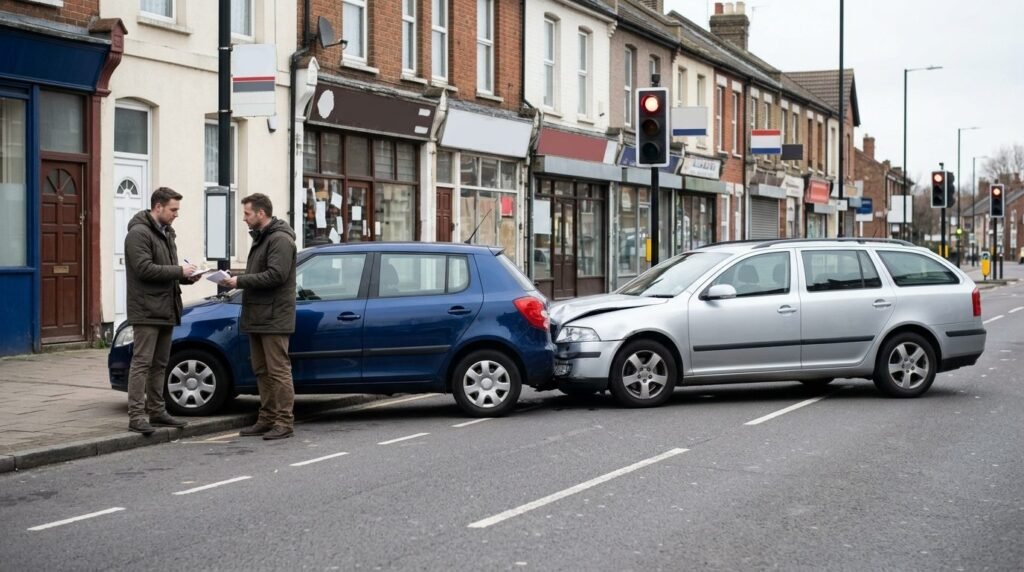
It depends on whose insurance pays for the repair. If you claim on your own policy, you’ll usually pay your excess up front and only get it back once your insurer recovers its costs from the other driver’s insurer. If the claim goes straight to the at-fault driver’s insurer instead, your own policy isn’t used, so there’s no excess to pay. When the accident wasn’t your fault, National Accident Support Line takes the claim to the other driver’s insurer for you, along with a like-for-like car while yours is off the road.
Most people hear about the excess on the first phone call. The car’s been hit, you ring your insurer, and the person on the line says the repair can be booked once you’ve paid £250, or £500, or more if a young driver is on the policy. “But it wasn’t my fault.” It doesn’t matter to them yet. You’re claiming on your policy, so the excess applies until they’ve been paid back.
No excess to pay if the accident wasn’t your fault. Fill in our form and we’ll call you back within 2 minutes.
Why your own insurer asks for the excess
The excess is the part of any claim on your policy that you agreed to cover yourself when you took the policy out. Your insurer doesn’t decide who caused the crash before it starts the repair. It pays for the repair under your policy, takes your excess, and then claims its costs back from the other driver’s insurer.
Once that money comes back, your excess should be returned and your no-claims discount restored. The catch is the wait. The other insurer has to accept liability first, which can take weeks or several months, and longer if their driver tells a different story. Some insurers include the excess in what they recover as standard. Others only do it if you bought legal expenses or uninsured loss recovery cover, and if your policy doesn’t mention it, chasing the excess may be left to you.
Three ways to claim, and what each means for your excess
There’s more than one route after a crash that wasn’t your fault, and the excess is one of the biggest differences between them.
| How you claim | Excess to pay? | Is your own policy used? | Replacement car |
|---|---|---|---|
| On your own insurance | Usually yes, paid up front and refunded only if your insurer recovers it | Yes, it’s a claim on your policy until the costs are recovered | A courtesy car if your policy includes one, usually small and only while your car is at the insurer’s garage |
| Directly with the other driver’s insurer | No | No | Their insurer may offer a hire car from its own suppliers |
| Through an accident management company such as NASL | No, where the accident wasn’t your fault | No | A like-for-like replacement on credit hire, with the charges recovered from the at-fault insurer |
Whichever route you choose, you still need to tell your own insurer the accident happened, because almost every policy requires it. Telling them isn’t the same as claiming on your policy. You can report the accident and say the claim is going to the other driver’s insurer. For a fuller comparison of the last two routes, see the pros and cons of an accident management company over your insurer.
If you’ve already paid the excess
You can still get it back. If your insurer is recovering its costs from the other side, ask in writing whether it’s including your excess and any other uninsured losses, such as the cost of getting to work while the car was off the road. Keep every receipt.
If your insurer isn’t recovering the excess, you can claim it from the at-fault driver’s insurer yourself. Write to them with the date, the registration numbers, the claim reference, your excess receipt and a short account of what happened. If they won’t pay and the facts are on your side, the small claims track is the last resort, and the court fee is added to what you claim back if you win.
When you might still have to pay an excess
There are situations where the excess is hard to avoid, even when you’re sure the crash wasn’t your fault.
Fault is disputed. If the other driver denies it and there are no witnesses or footage, the claim can’t go to their insurer until liability is sorted. Insurers often settle these at 50/50, and a split leaves you paying your excess with only part of it coming back. Our page on how insurers weigh up a split liability claim explains how that works and how to object before it’s agreed.
The driver didn’t stop. With nobody to claim against, the repair usually goes on your own comprehensive policy, excess and all. The Motor Insurers’ Bureau covers damage to a vehicle from an untraced driver only when someone was also seriously injured in the same incident. Footage, a registration number or a witness can turn a hit and run into an ordinary claim, which is why what to do when the other driver drove off is worth reading on the day.
The other driver wasn’t insured. Many comprehensive policies include an uninsured driver promise: if an identified, uninsured driver caused the crash, you pay no excess and keep your no-claims discount. You usually need the other vehicle’s make, model and registration. Read more on claiming when the driver who hit you had no insurance.
You only have third party cover. Your own policy won’t pay for your car at all, so the claim has to go to the other driver’s insurer, which is the route that doesn’t involve an excess anyway.
No excess to pay if the accident wasn’t your fault. Fill in our form and we’ll call you back within 2 minutes.
How NASL handles the excess on a non-fault claim
On the first call we ask how the accident happened and check the details. If it clearly wasn’t your fault and the other driver is identified and insured, the claim for your car goes to their insurer, not yours. That means no excess, and nothing claimed on your own policy.
We then arrange the repair and, if you need one, a replacement vehicle of the same size and class as yours. If your car can’t be driven, we aim to have the replacement with you within 48 hours. The hire charges are recovered from the at-fault insurer once the claim is settled. The credit hire agreement is a form of credit, so read it before you sign and ask what you would owe if the other side later disputed fault.
If the accident was your fault, or the evidence points that way, we’ll tell you straight away and point you back to your own insurer. Sending a claim to the other side that it was always going to fight helps nobody.
What drivers tell us about the excess
“My insurer says pay the excess now and they’ll get it back”
That’s the standard line, and it’s true as far as it goes. The money comes back if, and when, the other insurer accepts liability and pays out. If you’d rather not be out of pocket for months, the claim for your car can go to the other driver’s insurer instead. You don’t have to start the claim with your own insurer just because you rang them first.
“We’re both insured with the same company”
The same insurer then handles both sides. It should still look at the evidence fairly, but with two conflicting accounts and nothing independent, a split is common, and that brings the excess back into play. Send your photos, footage and witness details in writing before anything is agreed.
“The other driver admitted it at the scene, but their insurer has gone quiet”
An apology at the roadside isn’t a formal admission, and insurers take their own driver’s account before they accept anything. Keep a note of what was said, with the time, and any messages where they admitted it. Silence isn’t a reason to switch the claim to your own policy and pay the excess.
Frequently asked questions
Do I have to pay my excess if the accident wasn’t my fault?
Only if you claim on your own policy. Your insurer will usually take the excess up front and refund it once it recovers its costs. If the claim goes straight to the at-fault driver’s insurer, your policy isn’t used and there’s no excess to pay.
How long does it take to get my excess back?
There’s no fixed time. It comes back once the other driver’s insurer accepts liability and pays your insurer, which can take a few weeks if fault is clear and several months if it’s disputed.
Can I refuse to pay my excess?
Not on a claim under your own policy, because the excess is part of the contract. You can choose not to claim on your policy and take the claim to the at-fault insurer instead.
Do I pay an excess if I was hit by an uninsured driver?
Often not. Many comprehensive policies include an uninsured driver promise that waives the excess and protects your no-claims discount, as long as the other driver is identified and confirmed as uninsured.
Do I pay an excess after a hit and run?
Usually yes, because the claim has to go on your own comprehensive policy if the other driver can’t be traced. Report it to the police and look for footage or witnesses straight away, as finding the driver changes the claim.
Will paying the excess affect my no-claims discount?
The excess and the no-claims discount are separate. A claim on your own policy can put your discount on hold until the costs are recovered. A claim made directly against the at-fault insurer doesn’t touch it.
Is there an excess on a replacement car after a non-fault accident?
Ask before you sign. Some hire agreements carry an excess for damage to the replacement car while you have it, so check what it is and who pays for fuel, fines and a late return.
No excess to pay if the accident wasn’t your fault. Fill in our form and we’ll call you back within 2 minutes.