

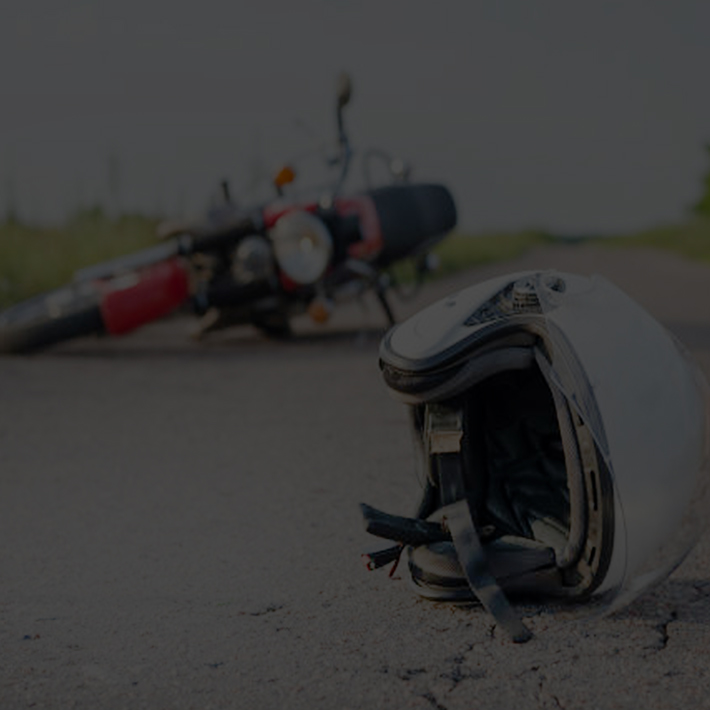
If your motorbike is written off after an accident that wasn’t your fault, the at-fault driver’s insurer should pay what the bike was worth just before the crash, plus your damaged kit and other losses, and if you need a bike in the meantime you can ride a like-for-like replacement until that money is paid. National Accident Support Line pursues the write-off value as part of our non-fault motorbike accident service, so you aren’t left arguing the figure on your own.
Write-offs are common with bikes. A low-speed spill can bend the forks or damage the frame, and against the bike’s value the repair soon stops making sense. Riders then get a phone call, a figure and a request for the logbook, often before anyone has explained what any of it means. This guide covers what happens from the inspection to the payment, and where riders lose money by agreeing too quickly.
No excess to pay if the accident wasn’t your fault. Fill in our form and we’ll call you back within 2 minutes.
Whose insurer pays: theirs or yours
Claim against the at-fault driver’s insurer and you are claiming damages: the bike’s value plus the other losses the crash caused, with no excess because your own policy isn’t used. Claim through your own insurer and it pays the market value on its policy terms, takes off your excess, then tries to recover its outlay from the other side. Either way, tell your own insurer the accident happened.
| Claim against the at-fault insurer | Claim through your own insurer | |
|---|---|---|
| What you’re paid | Pre-accident value, plus kit, recovery, storage and other losses | Market value under your policy, less your excess |
| Kit and accessories | Claimed as part of your losses | Depends on your policy’s limits |
| A bike while you wait | A like-for-like replacement through credit hire, if you need one | Only if your policy includes one |
| If you dispute the value | Argued with their insurer, and in the end by a court | Your insurer’s complaints process, then the Financial Ombudsman Service |
| The damaged bike | Still yours, unless you let their insurer take it for the full value | Usually passes to your insurer, unless you buy it back |
If you were mainly at fault, your own comprehensive cover is the route. If it’s your car that’s been damaged, our guide to what happens when your car is a write-off covers it.
The engineer’s inspection
An engineer assesses the bike first, in person or from photos and a repair estimate. Photo assessments are common with bikes, so if you think the damage has been overstated, ask for a physical inspection and get your own quote from a dealer.
Meanwhile, find out where the bike is, because recovery yards charge storage by the day. Don’t sell, strip or scrap it until the at-fault insurer has inspected it or agreed the figure: the damage is the evidence. Photograph the bike, the mileage on the dash and everything bolted on. If it has a private plate, apply to take it off before the bike changes hands.
Write-off categories for motorbikes: A, B, S and N
The category decides whether the bike can go back on the road. Insurers follow an industry code of practice, and its 2025 update changed the rules for bikes. Before it, Category S didn’t apply to motorbikes at all; now it depends on what the frame is made of.
| Category | What it means for a motorbike | Back on the road? |
|---|---|---|
| Cat A | Scrap: not repairable, no usable parts | No, it’s crushed |
| Cat B | Beyond safe repair, such as structural damage to an alloy or composite frame, or two or more of the forks, engine and swinging arm beyond safe repair | No, though usable parts can be salvaged |
| Cat S | Structural damage to a mild steel frame that can be safely repaired to the maker’s specification | Yes, once properly repaired |
| Cat N | No structural damage: fairings, lights, bars, pegs, or frame damage that only needs paint | Yes, once properly repaired |
Many modern sports, naked and adventure bikes have aluminium frames, so frame damage on those usually means Cat B. Ask the engineer which category they’ve given and why. Older bikes may show the previous labels, Cat C and Cat D.
How the pre-accident value is worked out
The figure should be what it would cost to buy the same make, model, year, mileage and condition at the time of the crash. Not what you paid, and not a part-exchange price. Insurers usually start from trade valuation guides and their own sales data, then adjust. Three things move the figure.
Comparable adverts: the same bike, year and similar miles, from dealers and private sellers, saved with the date. Three to five close matches beat one.
Modifications and accessories: guides value a standard bike, so an aftermarket exhaust, luggage, crash bars, heated grips or upgraded suspension have to be shown with receipts and photos from before the crash. Not every extra adds its full cost, but genuine ones should count. On your own policy, undeclared modifications can give your insurer a reason to cut the claim; against the at-fault insurer, what counts is proof the parts were fitted.
Mileage and condition: low miles for the year, a full service history, new tyres, a fresh chain and sprockets and a recent MOT all count in your favour.
If the offer is too low
Don’t accept a figure because it arrives quickly. Ask how it was reached: which guide, which adverts, which deductions. Reply with your own evidence, and if part of the figure isn’t in dispute, ask whether that part can be paid while the rest is argued.
On your own policy, a dispute goes through the insurer’s complaints process and then to the Financial Ombudsman Service. A rider claiming against someone else’s insurer usually can’t use the Ombudsman, so an unagreed value becomes part of the claim a court would decide. On a non-fault claim with us, we put the evidence to the at-fault insurer and argue the value for you.
No excess to pay if the accident wasn’t your fault. Fill in our form and we’ll call you back within 2 minutes.
Keeping a written-off motorbike
You can keep a Cat S or Cat N bike; Cat A and Cat B bikes can’t go back on the road. If you keep it, the payment is reduced by the salvage value, what the insurer would have got for the wreck. Bike parts sell well, so that deduction can be bigger than you expect. Get it in writing, and a repair quote, before you decide.
To keep a Cat N bike, you hold on to your logbook (V5C). To keep a Cat S bike, GOV.UK says to send the complete logbook to the insurance company and apply for a free duplicate on form V62. If the bike goes to the insurer instead, send them the V5C, keep the yellow “sell, transfer or part-exchange” slip, and tell DVLA it’s been written off, or you can be fined up to £1,000.
The write-off stays on the bike’s record for good, so declare it when you insure or sell it. No official inspection is needed before a repaired bike goes back on the road, so have the repair checked and get an MOT before you ride it.
If there’s finance outstanding on the bike
On hire purchase or PCP, the finance company owns the bike until the last payment, so the settlement clears the agreement first and anything left comes to you. The at-fault insurer pays the bike’s value, not your balance, so a shortfall stays with you unless you have GAP insurance. Tell the lender about the accident, keep the payments going until the agreement is settled, and pass the agreement details to whoever is handling your claim.
Kit and accessories are claimed separately
Kit isn’t part of the bike’s value, and riders who forget it lose real money. Helmets go on the list even when they look undamaged, because the liner inside can be crushed with no mark on the shell. Leathers and textiles lose their protection where they’ve slid along the road, and gloves and boots go the same way.
Then the easy-to-miss items: a top box or panniers, a sat nav and mount, a helmet intercom, an action camera, a disc lock, heated kit. Count each once, either in the bike’s value or on its own. Keep the damaged items, photograph them, and find receipts, order confirmations or bank statements. If you were hurt too, what a motorbike compensation claim can include covers the injury side.
Staying on a bike until you’re paid
A settlement can take weeks, longer if the value is argued. If you need to ride, you can keep a like-for-like bike while your claim is settled, until the write-off payment is made. The period has to be reasonable, so reply to the valuation promptly: the other side can challenge days that weren’t needed. It’s arranged through credit hire, a credit agreement: the charges are claimed from the at-fault insurer, but read it before you sign, ask what you’d owe if liability were disputed, and expect to cover what’s in your control, such as fuel, fines, late return and any excess on the hire bike. See how a credit hire agreement works.
Situations riders describe to us
“They wrote it off from photos and I think it’s fixable”
Common with bikes. Ask for a physical inspection and get a dealer’s repair quote. If it’s written off anyway, the question becomes whether the value is right.
“The offer is less than I paid eight months ago”
The purchase price isn’t the test. The price of the same bike now, with your miles and extras, is. Send us the adverts and receipts and they go to the insurer with the claim.
“I want the bike back to rebuild it”
Possible with Cat N, and with Cat S on a steel frame. Price the parts before you agree, because a cheap buy-back can become an expensive winter in the garage, and tell us early so a salvage agent doesn’t collect it first.
Frequently asked questions
What happens when a motorbike is written off and it wasn’t my fault?
An engineer assesses it and gives it a category. The at-fault driver’s insurer pays the pre-accident value, plus kit and other losses, with no excess to pay, and a replacement bike can be arranged if you need one.
How do I check if my motorbike has been written off?
After your own accident, the insurer confirms the category in writing. For a used bike you’re buying, a paid vehicle history check shows insurance write-off markers that the logbook may not.
Can I keep my motorbike if it’s been written off?
Yes, if it’s Cat S or Cat N, less the salvage value. It must be properly repaired, and the write-off stays on its record.
Does Category S apply to motorbikes?
Since the 2025 update to the industry code, yes, where a mild steel frame can be safely repaired. Structural damage to an alloy or composite frame means Cat B.
Do I have to accept the insurer’s valuation?
No. Ask how it was worked out and reply with comparable adverts, receipts for extras and the service history.
Will the at-fault insurer pay for my helmet and leathers?
Kit damaged in the crash is claimed from them as a separate loss, along with accessories like a sat nav or intercom. Keep the items and any proof of what you paid.
How long does a write-off settlement take?
An agreed value on a clear non-fault claim can settle within weeks. A disputed value or disputed fault takes longer.
No excess to pay if the accident wasn’t your fault. Fill in our form and we’ll call you back within 2 minutes.