

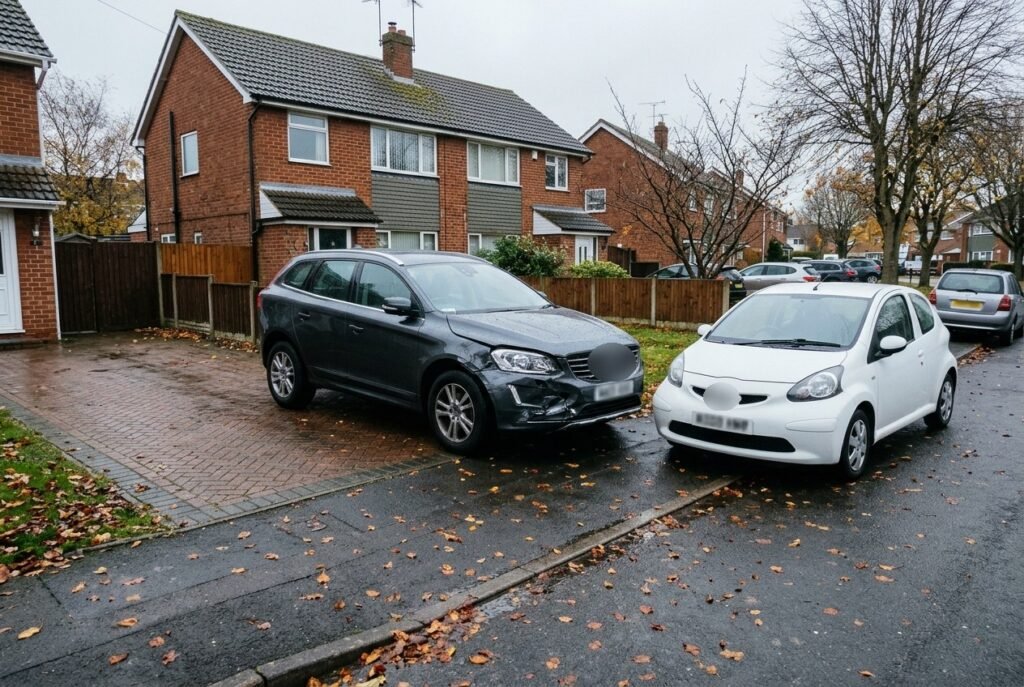
You can keep a hire car after a non-fault accident for as long as your own car is reasonably off the road because of it: until the repair is finished, or, if the car is written off, until its value is agreed and paid, plus a short time to buy another. The law in England and Wales sets no fixed number of days. National Accident Support Line arranges a replacement car on credit hire on that basis, with no fixed limit, until your car is repaired or your claim is settled.
The question usually comes up at an awkward moment. The garage has been waiting three weeks for a headlamp. The insurer has declared the car a total loss but hasn’t made an offer. Someone on the phone says the hire car has to go back on Friday. What decides the end date is what was reasonable, and more of that is in your hands than people expect.
No excess to pay if the accident wasn’t your fault. Fill in our form and we’ll call you back within 2 minutes.
The legal test: a reasonable period, not a set number of days
A hire car after a non-fault accident is claimed as damages for losing the use of your own car. Two things have to be shown: that you needed a car, and that the length of the hire was reasonable. If the at-fault insurer says you kept it too long, it’s for them to show you failed to take reasonable steps to keep the loss down. Lawyers call that the duty to mitigate.
The Court of Appeal set out the stages in Zurich Insurance v Umerji [2014] EWCA Civ 357. It was reasonable for the driver to wait for an engineer to say whether his car was worth repairing, and then to give the at-fault insurer a fair chance to inspect it. Once the written-off car had gone, about a fortnight was allowed to buy another. Each stage is expected to move promptly, and a hire that drifts between them is where the arguments start.
Repairs get a kinder rule. In Clark v Ardington Electrical Services [2002] EWCA Civ 510, the Court of Appeal held that where you put your car with a reputable garage, ordinary delays in the repair are a foreseeable result of the accident and fall on the driver who caused it. You’re expected to chase the garage, not to fix its parts supply.
When your car is being repaired
The hire covers the days your car is off the road because of the accident: recovery, the engineer’s inspection, waiting for authority and parts, the repair itself and the call to say it’s ready. If your car is still safe to drive, it stays with you until the repair slot, and the hire starts when it goes in.
Parts shortages are the usual reason a two-week repair turns into six. That isn’t your doing, and it’s normally the at-fault side’s cost. What protects you is a paper trail: ask the garage for the expected parts date, note when you chased, and pass any delay on to whoever is handling your claim. A finished car that sits at the garage for a week because nobody collected it is a different matter.
When your car is written off
A total loss takes longer because there are more steps: the engineer’s report, the at-fault insurer’s chance to inspect, a valuation, your answer to it, then payment. If the car is on finance, the settlement goes to the finance company first and anything left over comes to you. Our guide to how the at-fault insurer values a written-off car covers the figure itself.
The hire normally runs until the settlement is paid. Where it goes wrong is a gap the driver could have closed: a valuation left unanswered for three weeks, or a logbook and finance details nobody sent. If you think the offer is too low, say so straight away and back it with adverts for similar cars. Disputing the value doesn’t automatically end the hire, but a long argument over a small difference can be held against you, so ask whether the amount nobody disputes can be paid on account while the rest is argued. We’ll talk through your options on the call.
What stretches the hire and what cuts it short
| What happens | Effect on the hire period |
|---|---|
| The garage is waiting for parts | Usually counts, if the garage is reputable and you’ve chased it |
| The at-fault insurer is slow to inspect or make an offer | A reasonable wait counts, but not an open-ended one |
| You can’t pay for the repair or a deposit until the money arrives | Can justify a longer hire, but you may be asked to prove it |
| You take weeks to answer a valuation or send documents | The days you caused can be cut |
| Your car is ready but you don’t collect it | Usually not recoverable, and late return charges can fall to you |
| The at-fault insurer offers a suitable car of its own and you refuse | What’s recovered may be limited to what their car would have cost |
| You stop needing a car, for example a second car becomes free | The need has ended, so the hire should too |
Being short of money can justify waiting for the insurer to pay, but the courts look at the whole picture. In Opoku v Tintas [2013] EWCA Civ 1299, the Court of Appeal upheld a decision to cut a long hire because the driver could have funded the repair himself well before he did. If paying for a repair or a deposit up front would be a real struggle, say so at the start.
No excess to pay if the accident wasn’t your fault. Fill in our form and we’ll call you back within 2 minutes.
Once the write-off payment arrives
The payment is the signal that the hire is coming to an end. You’re expected to use the money to buy another car within a short, reasonable time, usually a matter of days rather than weeks. Start looking when the figure is agreed rather than when the money lands. Ordering a new car with a three-month wait and keeping the hire car until it’s delivered is very likely to be challenged.
If most of the settlement went to a finance company and what’s left won’t cover a deposit, tell us before the hire is due to end, not after. When the hire car goes back, check it over with whoever collects it and keep a copy of what you both signed.
Mitigation: why replying promptly matters
Every day a letter or call sits unanswered is a day the at-fault insurer can say you caused. What most often costs drivers hire days:
- not replying to the engineer, the valuation or a request to inspect the car
- not sending the V5C logbook, the finance settlement figure or the keys when asked
- not approving the repair, or not letting the garage have the car
- not collecting the car once it’s ready
- keeping the hire after you stopped needing it
Reply the same day where you can and keep copies. If the at-fault insurer rings offering a car, a repair or a payment, don’t ignore it: note what was offered and pass it on, so there’s a record of why it was or wasn’t suitable. The rates and paperwork behind all of this are in our explainer on why credit hire rates are disputed and what the agreement says.
Taxi, PCO and van drivers who earn with the vehicle
If your car or van is how you earn, the hire period is argued harder, because plated cars and working vans cost more to hire. The same test applies, with extra steps that genuinely take time. Many licensing authorities require an accident to be reported within 72 hours, a damaged licensed vehicle can be suspended until it passes a compliance test, and a written-off PCO car has to be replaced with one that can be licensed. Those steps can count towards the period, so keep the emails and the dates.
The other argument to expect: where the hire costs far more than the profit the vehicle would have made, the at-fault insurer can say the claim should be limited to that lost profit. A replacement is easier to justify when you’d lose regular work or customers without it, you also need the vehicle for family life, or you simply can’t afford to stop working. Licensed drivers can read about a plated replacement while yours is off the road, and tradespeople about matching a working van to the job.
How National Accident Support Line handles the hire period
There’s no fixed limit on the hire. You keep the vehicle until your car is repaired or your claim is settled, and if the at-fault insurer disputes fault, you stay in it while the dispute is dealt with. Our side is keeping the claim moving between the garage and the insurer, and how we keep the repair moving explains that part. Your side is answering quickly and telling us when anything changes. If you’re comparing this with your own policy, here are the limits on an insurer’s courtesy car.
If you’re already in a courtesy car from your own insurer and the accident wasn’t your fault, you don’t have to stay in it. A courtesy car is usually a small car, offered only while an approved garage repairs yours, and many policies stop it if the car is written off. You can ask for a car that matches yours on credit hire instead: tell us what you’ve been given and when it’s due back, and we’ll go through it on the call.
Situations people describe to us
“The garage says the parts are on back order for another month”
Ask the garage for the order date and the supplier’s estimate in writing, and pass it on. A delay you’ve chased and recorded is far easier to defend than one nobody noticed. If your car is safe to drive while you wait, say so, because the hire may only be needed once the repair starts.
“They’ve written it off, but nobody has made me an offer”
Waiting for the insurer to inspect and value the car is a reasonable part of the period, but not an endless one. Chase in writing, keep the dates, and send the service history, the extras fitted and adverts for similar cars without waiting to be asked.
“The money’s arrived, but I haven’t found a car yet”
Tell us the date the payment reached you and when you expect to buy. Don’t let the hire run on quietly while you think about it.
Frequently asked questions
How long can I keep a hire car after an accident that wasn’t my fault?
For as long as your own car is reasonably off the road because of the accident: until it’s repaired, or until a write-off is paid plus a short time to buy another. There’s no fixed number of days.
Is there a maximum number of days for credit hire?
Not in law. The test is whether the period was reasonable. NASL sets no fixed limit and the hire runs until your car is repaired or your claim is settled.
How long after the write-off payment do I have to return the hire car?
Only a short time, long enough to buy a reasonable replacement. Start looking when the figure is agreed, and tell us the day the money arrives.
Can I keep the hire car while I dispute the write-off value?
Disputing a low offer doesn’t end the hire by itself, but a long dispute over a small amount can be argued against you. Respond quickly, with evidence, and ask about the undisputed amount being paid on account.
How long does a courtesy car last?
Usually only for the repair. Some policies cap it at a set number of days, and most stop once the car is written off. A replacement claimed from the at-fault driver’s insurer doesn’t depend on your policy.
What happens if I keep the hire car too long?
The at-fault insurer can refuse to pay for the days that weren’t needed, and charges for a late return can fall to you. Hand the car back promptly once yours is ready or you’ve had time to replace it.
No excess to pay if the accident wasn’t your fault. Fill in our form and we’ll call you back within 2 minutes.
h